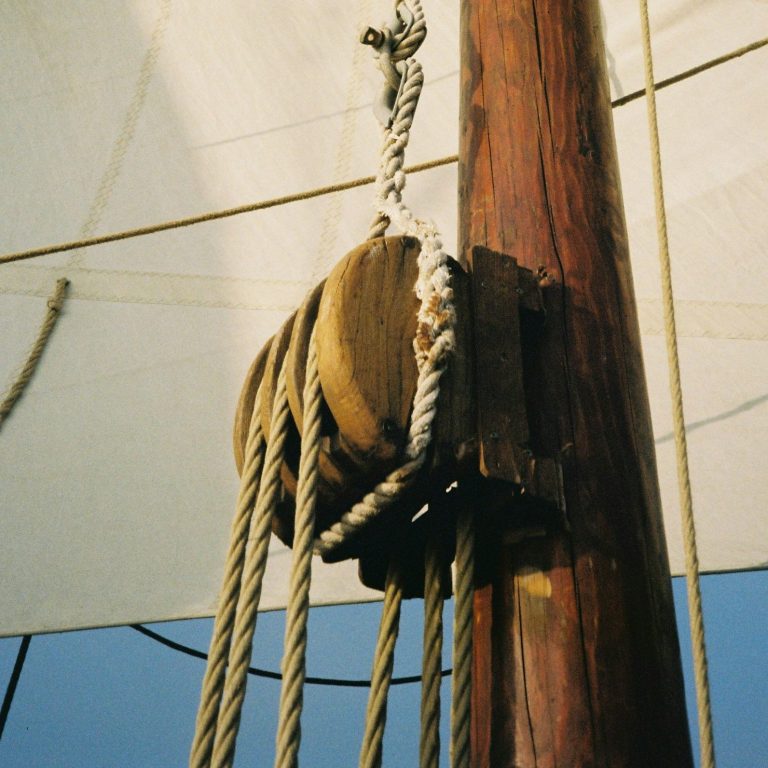
THE BUILD
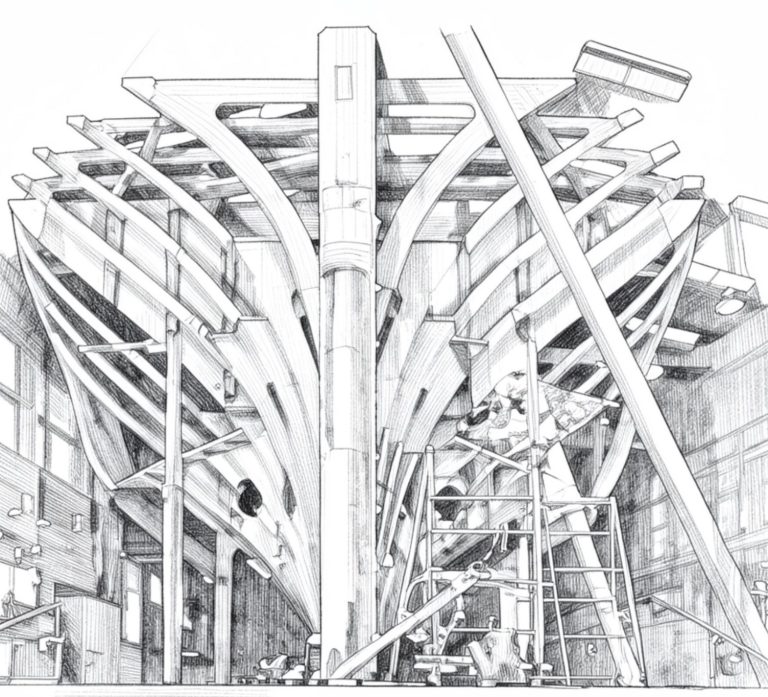
Illustration: Interpretive line drawing based on a frame from A Fated Ship (1981), Part 1.
Original source: NZ On Screen.
THE BUILD
Steel beneath the timber. Craftsmanship in every detail.
In 1978, construction of the Bounty replica began at Whangārei Engineering & Construction Ltd in New Zealand.
The challenge was to build a ship with a steel hull that would reproduce the appearance of an eighteenth-century sailing vessel. As the documentary A Fated Ship records, this required more than engineering: historical research, detailed design and traditional craftsmanship all played a part.
From the shaping of the steel frames to the oak planking, the ship's equipment and its traditionally built launch, the work brought modern shipbuilding together with older methods of workmanship.
This is the story of how the replica took shape.
THE STEEL FRAMEWORK
A modern structure. An eighteenth-century form.
The replica was built with a steel hull. The builders explain that an all timber vessel was considered too great a fire risk.
Working in steel was familiar to the shipbuilders. Recreating the shape of the original vessel required additional research and design. The documentary describes the steel frames as having been shaped almost identically to those of the Bethia, the vessel acquired by the Admiralty and converted into the Bounty.
The framework established the ship's form. The next challenge was to give that modern structure the appearance of a traditional wooden sailing ship.
OAK SHEATHING AND TIMBER WORK
Giving steel the appearance of timber.
The documentary identifies C. Watson's family firm as a subcontractor on the main ship. Its largest job was sheathing the steel hull in oak planks.
This was a defining part of the replica's construction. The steel hull provided the structure, while the oak sheathing contributed to the appearance of an eighteenth-century wooden vessel.
The work brought traditional woodworking skills into a modern shipbuilding project. It is an important part of the story of how the replica was made — and a reminder that historical authenticity depended as much on craftsmanship as on engineering.
RECREATING THE ORIGINAL DETAILS
Authenticity lies in the details.
The builders drew on historical plans and research to reproduce the Bounty's appearance and arrangement. The documentary describes features including the windlass, capstan, steering gear, hatches and their coamings, and the ship's guns. It also explains the arrangement of the decks and the space allocated to the breadfruit plants.
The original vessel had copper sheathing to protect its wooden hull against the teredo worm. The replica's steel hull did not require the same protection, only the appearance of copper sheathing was needed. These details show the care taken to recreate the original vessel's character, while adapting its construction to the requirements of the replica.
THE CRAFT OF THE EQUIPMENT
Rediscovering traditional methods.
Harry Spencer, who came from Cowes on the Isle of Wight, supervised the making of nearly all the Bounty's equipment.
In A Fated Ship, Spencer describes the research required to recover older styles of workmanship and methods that had become less familiar. He explains that, although modern approaches might have been easier, traditional methods proved effective when tested in practice.
Working with specially made, expensive materials demanded confidence in those methods. His account reveals another dimension of the project: recreating the ship meant recovering not only its appearance, but also the craftsmanship behind its equipment.
THE 23-FOOT LAUNCH
Built by traditional methods.
The Bounty's launch was reconstructed using the original launch plans. Mr. C. Watson built the boat in almost exactly the same way as its eighteenth-century counterpart.
The documentary explains that the launch's size was increased from 20 feet to 23 feet. Unlike the main replica, which had a steel hull, the launch was built using traditional boatbuilding methods.
There was even a small conflict between craftsmanship and appearance. David Lean wanted the new boat to look like a working launch, marked by use rather than perfectly new. Its builder explained the difficulty of deliberately creating the appearance of wear on a newly built boat.
The launch offers a distinct example of the traditional skills involved in the wider construction project.
THE SHIP TAKES SHAPE
A faithful replica, with an unfinished story.
As construction progressed, the steel framework, oak sheathing, fittings and other equipment brought the replica closer to its intended appearance.
The documentary also records how the changing circumstances of the film project affected the work. Plans for some final finishing details were cancelled, and the ship was to be completed only to the stage required for sea trials. This is an important part of the construction record. The replica reflected an ambitious effort to recreate the original vessel, but the work ultimately took place under changing practical circumstances.
The ship was taking shape. Its next chapter was the transition from the building yard to the water.
SOURCE
A Fated Ship (1981), Part 1 — documentary account of the construction of the 1978 Bounty replica in Whangārei, New Zealand.
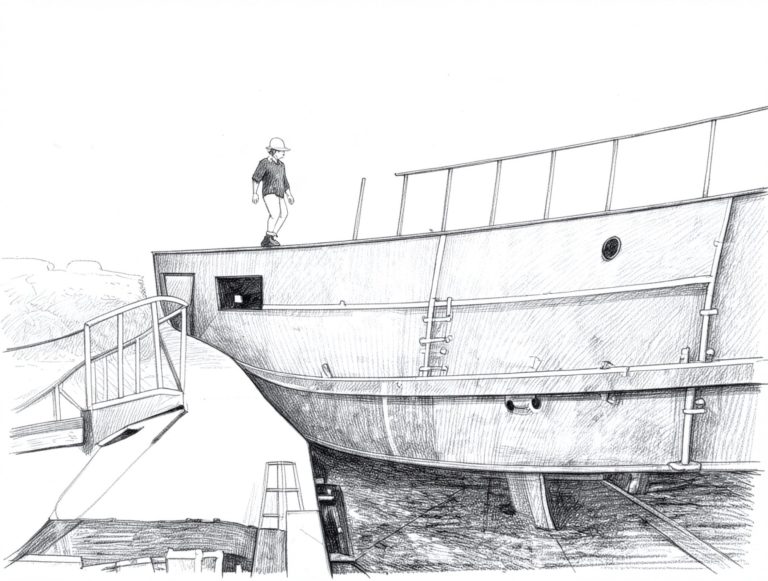
Illustration: Interpretive line drawing based on a frame from A Fated Ship (1981), Part 1.
Original source: NZ On Screen.
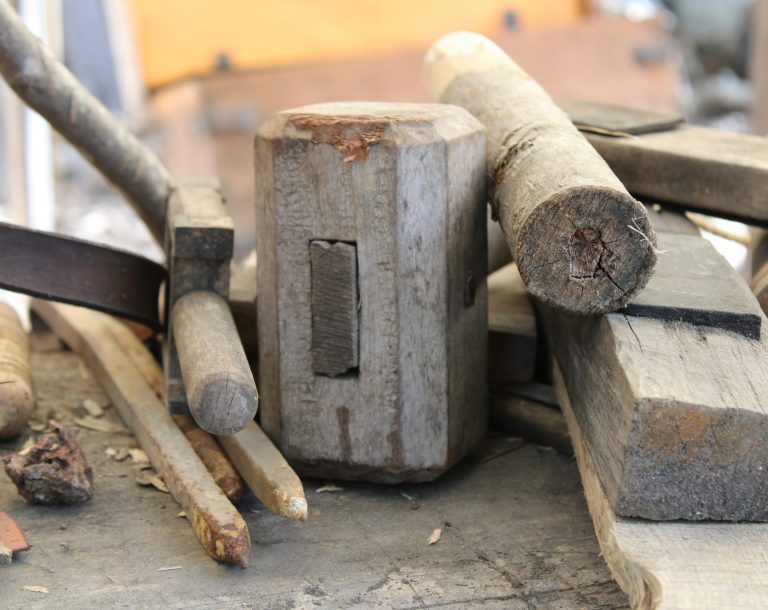
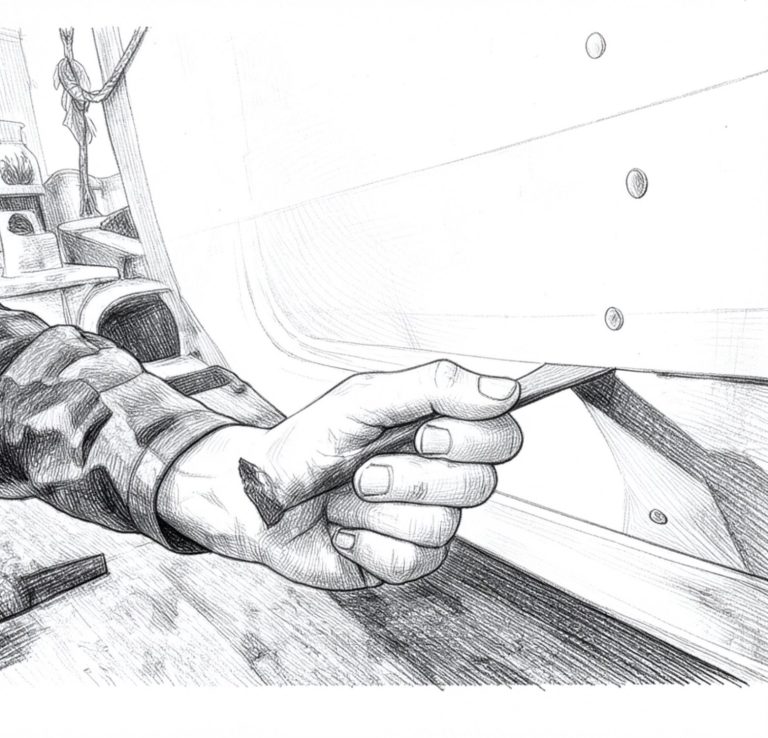
Illustration: Interpretive line drawing based on a frame from A Fated Ship (1981), Part 1.
Original source: NZ On Screen.
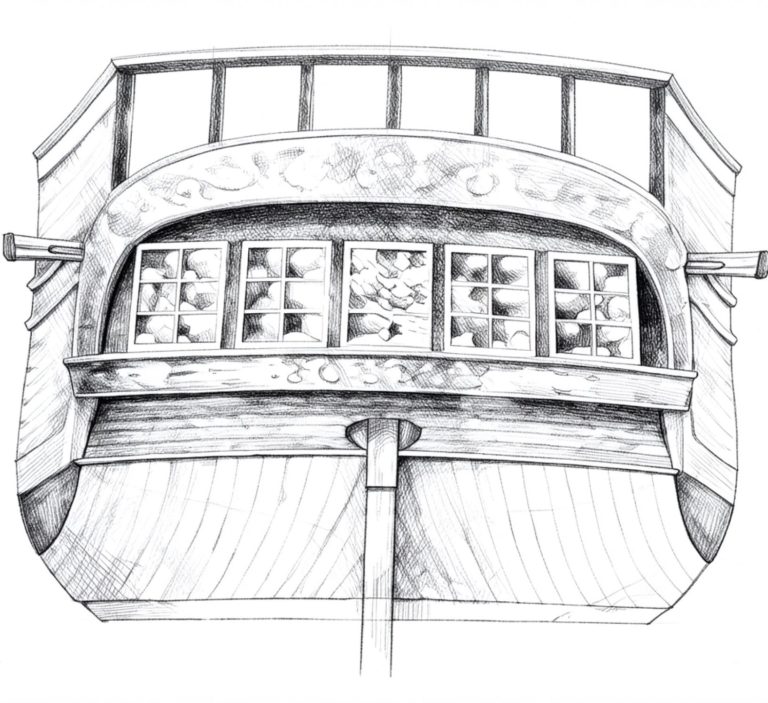
Illustration: Interpretive line drawing based on a frame from A Fated Ship (1981), Part 1.
Original source: NZ On Screen.