THE PEOPLE
The lives behind the Bounty
A ship is built from steel, timber, rope and sail. But her story is made by people. The 1978 Bounty replica brought together the engineers, shipbuilders, riggers, officers and crew whose skills and decisions shaped her early life. In the years that followed, she became part of the lives of many others, people who sailed aboard her, worked on her, cared for her and carried memories of their time with her. Some of their stories survive in photographs, documents and contemporary accounts. Others remain in the memories of those who were there. This collection brings those people and their stories together, one at a time.
The ship is the reason. The people are the story.

01 — DAVID LEAN
THE VISIONARY
David Lean was the acclaimed British film director who conceived an ambitious film project centred on the voyage of HMS Bounty. Determined to bring the story to the screen with historical authenticity, Lean’s plans called for a full-sized sailing replica to be built in New Zealand. The project led to the construction of the 1978 Bounty at Whangārei Engineering & Construction Ltd. (WECO), bringing together the production’s vision and the skills of New Zealand’s shipbuilders.
Lean’s planned film was never made, but the vessel created for it survived beyond the project that inspired her. The 1978 Bounty became a lasting physical legacy of his original vision, eventually appearing in Roger Donaldson’s 1984 film The Bounty.

02 — DINO DE LAURENTIIS
THE PRODUCTION
Dino De Laurentiis was the film producer behind the project for which the 1978 Bounty replica was commissioned. His involvement brought the resources and ambition of a major film production to the creation of a full-sized sailing ship in New Zealand. Built for David Lean’s planned film about the Bounty voyage, the replica was launched at Whangārei on 16 December 1978. Although Lean’s film did not proceed, the vessel remained a tangible legacy of the production that had brought her into existence.

03 — JOSEPH “MAC” McGUIRE
THE CONNECTION
Joseph “Mac” McGuire was an Auckland based surveyor for Lloyd’s of London whose professional judgement helped bring the Bounty project to Whangārei. In 1978, as David Lean’s planned film project took shape, McGuire recommended Whangarei Engineering & Construction Ltd. (WECO) to undertake the construction of the replica. His role connected the film production with the New Zealand shipyard where the vessel would be built. The New Zealand Listener recorded his involvement in an article published on 15 April 1978, preserving an early account of the project and the people bringing it to life.
04 — T.C. “CES” WATSON
THE TRADITIONAL SHIPWRIGHT
T.C. “Ces” Watson brought traditional shipbuilding knowledge and craftsmanship to the construction of the 1978 Bounty replica in Whangārei, New Zealand. Through T.C. Watson & Sons, his family firm contributed to the research and construction work associated with the replica. The firm's work included preparing the steel hull's oak sheathing and reconstructing the Bounty's launch using the original launch plans. In A Fated Ship (1981), Ces is shown discussing the traditional construction of the launch. Unlike the main vessel, built around a steel hull, the launch was made using methods closely following those of its eighteenth-century counterpart.
His contribution illustrates an important aspect of the project: the effort to combine modern engineering with the traditional skills needed to recreate the appearance and character of an earlier sailing vessel.
05 — THE WECO TEAM
THE BUILDERS
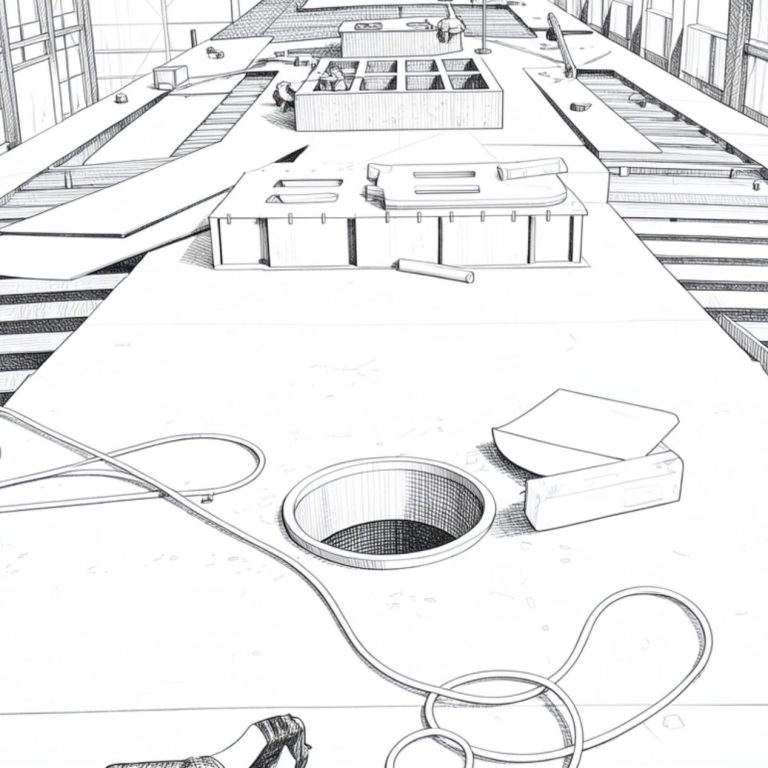
Whangarei Engineering & Construction Ltd. (WECO) undertook the construction of the 1978 Bounty replica at Whangārei, New Zealand. The project presented a considerable challenge: to recreate the appearance of an eighteenth century wooden sailing ship while building a modern steel hulled vessel that met contemporary safety requirements.
The replica was launched on 16 December 1978. Behind that milestone lay the combined work of the shipyard’s engineers, tradespeople and workers, each contributing to the creation of a vessel that would go on to make maritime and film history. Many of those individuals remain unidentified, but their work endures in the ship itself.